Showing posts with label Reading Diary. Show all posts

Tuesday, October 27, 2015

Reading Diary B - British // Alice

British Stories

Author's Notes

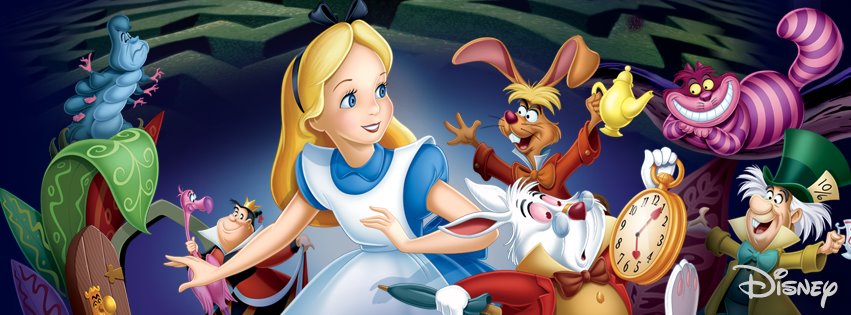
So a lot of great classical stories hail from Europe. King Arthur, Robin Hood, and especially Alice in Wonderland (at one point competing with Lion King for the spot as my favorite childhood Disney movie). I just loved the adventure of Alice more  than Robin Hood or King Arthur. And maybe because the depictions of the other two in their movies, Disney or live action, doesn't compare to the dope trippy randomness of Alice's many encounters and adventure.

My portfolio being about warriors it made me think of an combo Alice in Wonderland warrior comprised of the many characters and traits of them all into a mega Alice warrior haha. The random thoughts of Michael's crazy head, oh my haha. Just for a quick example: like a little blonde girls with blue eyes, many arms like the caterpillar, extra quickness from the white rabbit - almost like being faster than normal time and a giant clock shield, invisibility from the cheshire cat - along with purple and lavender horizontal war-paint streaks on her face, extra great hearing and from the crazy march hare, berserk rage ability from the crazy mad hatter, a crown and heart tipped spear from the queen of hearts, and super strength from the twins tweedledee and tweedledum haha. What a crazy character.


Sunday, October 25, 2015

Reading Diary A - British // Beowulf

Beowulf

Author's Notes


We all know the story of Beowulf, at least most of us. This is to me probably the most legendary legend ever, that's right, I used legend twice in one sentence. I reference Hercules a lot, but mostly cause of his popularity, thank to Disney, but Beowulf is the legend of all legends (that's right, said it again) in its most purist form if you ask me. It doesn't sugar coat or censor, it certainly boosts and over exaggerates, and the warrior's feats are epic = all qualities a legend must have. It also has beautiful, descriptive imagery and writing to go along with the action packed tasks. The writer Strafford Riggs lays out an almost movie like script in such detailed passages of writing that I hope to even halfway emulate. Here is my favorite passage in which Beowulf and Grendel go savage on one another:

"Beowulf, the lord of Geatsland had fastened both mighty hands upon the monster's arm and, with a sudden twist that forced a groan of agony from Grendel's lips, leaped behind him, forcing the imprisoned arm high up Grendel's back, and the beast fell prone on the floor.

Now came the final struggle, and sweat poured from Beowulf, while from Grendel there oozed a slimy sap that smelled like vinegar and sickened Beowulf. But he clung to the monster's arm, and slowly, slowly, he felt its great muscles and sinews give way, and as his foot found Grendel's neck, he prayed to all the gods for help and called upon his father Ecgtheow for strength to sustain him in this desperate effort.

And the mighty arm of Grendel gave way in the terrible hands of Beowulf, and, with a piercing shriek that shook the gilded rafters of Heorot, Grendel stumbled forward, leaving in Beowulf's hands the gory arm."

Detailed. Written well. Exciting. Epic. Legendary. Beowulf. Beautiful.


Reading Diary B - British North America Native Stories

British North America

The Burning of the World

Once all the world was burned. Only a man and his mother and his sister were saved. Before the fire there were many people on earth. Then the young man fell out with his father, and they became enemies. The young man had heard that all the world was to be burned, but his father did not believe it.

Now the young man made a bow and arrows. He shot one arrow to the west, and one to the east, and one to the north, and one to the south. The places where the arrows fell were the four corners of a bit of ground which would not burn. The young man told everybody who wanted to be saved from the fire to come onto that square of land. Many did not believe the world would be burned, so they would not come.

After a while the fire came. They could hear it. They were encamped by the side of a big lake. By and by all the birds and animals came running to that bit of ground marked out by the arrows. The old man had quarreled with his son, so he would not come.

The fire was very hot. All the water boiled because it was so hot. After a while the fire was put out, and the water had settled down. Everything had to be started over again.

Now there were many animals on this patch of ground, and the man named some of them and told them what to do.

He put Beaver in the water, but Rabbit wanted to live in the water. The man said, "No."

Then Rabbit jumped into the water and the man had to pull him out. He said to Rabbit, "Your legs are too long. Even if you do eat willow like Beaver, you don't go about in the water properly."

Squirrel wanted to be Bear. He did all he could to be Bear. He argued and chattered a great deal about it. The man said, "Oh, you're too noisy. You wouldn't be a good Bear." He said also, "If you are Bear, you are so noisy that when people come again, they will kill too many of you. A bear must keep quiet. He has many enemies."

Then Squirrel began to weep. He wept until his eyes were white. Even today Squirrel has eyes bright and swollen from weeping.

The man made Bear then, because he was nice and wise and quiet.

Somebody wanted to be Caribou—nobody remembers just who wanted that.

Then Deer was made, and made so swift that he could outrun all pursuers.

After the man had finished making all the animals, he put a mark on them, so people would know what they were. Then the man had to give all the people new names. His mother he called Robin, because she was friendly. His sister he called Golden-winged Woodpecker, because she was beautiful. He called himself Blackbird because he would only come every spring.

Author's Note

Interesting story. My favorite part was squirrel wanting to be bear. It made me laugh a little at the thought. Now I could have shown an image of the world burning. And trust me I wanted to, it was temping (some people just want to see the world burn) but comedy beat intensity today and a colorful picture of a bear and a squirrel was chosen instead as that is my favorite part of the whole story haha.


Reading Diary A - Pacific Northwest Native Stories

Pacific Northwest

Three Raven stories


The Origin of DaylightNanaimo version of Tlingit legend
When the earth was very new and young, it was dark and cold and gray. Even the stars were black. There was no light anywhere for Gull kept it in a small box which he guarded carefully.

His cousin, Raven, was tired of the dark. He wished for the daylight.

One day when Gull and Raven were out walking, Raven thought, "I wish Gull would run a thorn into his foot."

Hardly had he thought so, when, in the darkness, Gull stepped on a thorn. "Sqenán! My foot!" cried Gull.

"A thorn?" asked Raven. "Let me see it. I will take it out." But it was so dark Raven could not see the thorn. He asked Gull to open the box and make it light.

Gull opened it just a little way and the light was very faint. Raven said, "You must give me more light."

Gull answered, "Sqenán!"

So Raven pretended not to see the thorn. Instead of pulling it out, he pushed it in deeper and deeper, saying, "You must give me more light."

"Sqenán! Sqenán! My foot! My foot!" cried Gull. Raven pushed the thorn in deeper and deeper until Gull at last opened the box. That is the way the daylight came.
___

Owl and RavenEskimo

OWL and Raven were close friends. One day Raven made a new dress, dappled black and white, for Owl. Owl, in return, made for Raven a pair of whalebone boots and then began to make for her a white dress.

When Owl wanted to fit the dress, Raven hopped about and would not sit still. Owl became very angry and said, "If I fly over you with a blubber lamp, don't jump." Raven continued to hop about.

At last Owl became very angry and emptied the blubber lamp over the new white dress. Raven cried, "Qaq! Qaq!" Ever since that day Raven has been black all over.
___

The Spell of the Laughing RavenKlamath

At "dance place" when the Klamath Lake people danced, many people were there. Kemush, Old Man of the Ancients, went there. Then Old Raven laughed at them, laughed when they danced, and all people dancing there became rocks.

Gray Wolf entered Kitti above, from the north. There he stopped and lay down, although not yet having reached his home. In full dress, at that spot, moccasins with beads on toe, stopped and rested.

Then Old Grizzly approached Old Gray Wolf while lying asleep. And Old Grizzly stole from Gray Wolf his moccasins, beads also, and put them on to go to the fishing place.

Upon this, Old Gray Wolf, waking up, threw Old Grizzly down hill. He rolled him down over the rocks for having robbed him of moccasins and beads also. Thus killed he Old Grizzly.

Upon this, the Klamath Lake people began fighting the Northerners because Old Grizzly had been killed by Old Gray Wolf.

Then Old Raven laughed at them when fighting and they became rocks.
___

Author's Notes

These stories caught my eye most from the Pacific Northwest Native stories. I chose to do the Pacific NW in the first place because I recalled reading about their vastly different customs and color palette from elements such as totem pols to the very stylized depictions of animals, and their tattoo like abstractions. I also have played rugby with some Pacific Islanders, also know as Polys, including places like Hawaii, Fiji, Samoa, etc, as rugby is a huge part of their culture as well. These are generations of course and not all of the customs and cultural stories match up with the stories I've read. This units stories particularly match up with the states of Washington and Oregon.

These short story formats also made me think of Aesop's Fables. I love this format. And having three to directly compare and contrast with their respective cultures attached to them is a treat. Like Pacific NW Native Aesop fables, just really cool to me.

The below picture is of a sculpture of a Raven Dancer. It reminded me of the Black Swan as well but with a Native essence of solidarity. I love black on black. The matte and gloss contrast is so beautiful. I want to possibly make a warrior out of this little guy as it has inspired me.


Tuesday, October 20, 2015

Reading Diary B - Myths & Legends of the Great Plains

Myths and Legends of the Great Plains

The Buffalo & The Grizzly Bear

Grizzly Bear was going somewhere, following the course of a stream, and at last he went straight towards the headland. When he got in sight, Buffalo Bull was standing beneath it. Grizzly Bear retraced his steps, going again to the stream, following its course until he got beyond the headland. Then he drew near and peeped. He saw that Buffalo Bull was very lean, and standing with his head bowed, as if sluggish. So Grizzly Bear crawled up close to him, made a rush, seized him by the hair of his head, and pulled down his head. He turned Buffalo Bull round and round, shaking him now and then, saying, “Speak! Speak! I have been coming to this place a long time, and they say you have threatened to fight me. Speak!” Then he hit Buffalo Bull on the nose with his open paw.

“Why!” said Buffalo Bull, “I have never threatened to fight you who have been coming to this country so long.”

“Not so! You have threatened to fight me.” Letting go the buffalo’s head, Grizzly Bear went around and seized him by the tail, turning him round and round. Then he left, but as he did so, he gave him a hard blow with his open paw.

“Oh! Oh! Oh! Oh! Oh! you have caused me great pain,” said Buffalo Bull. Bobtailed Grizzly Bear departed.

Buffalo Bull thought thus: “Attack him! You too have been just that sort of a person.”

Grizzly Bear knew what he was thinking, so he said, “Why! What are you saying?”

“I said nothing,” said Buffalo Bull.

Then Grizzly Bear came back. He seized Buffalo Bull by the tail, pulling him round and round. Then he seized him by the horns, pulling his head round and round. Then he seized him again by the tail and hit him again with the open paw. Again Grizzly Bear departed. And again Buffalo Bull thought as he had done before. Then Grizzly Bear came back and treated Buffalo Bull as he had before.

Buffalo Bull stepped backward, throwing his tail into the air.

“Why! Do not flee,” said Grizzly Bear.

Buffalo threw himself down, and rolled over and over. Then he continued backing, pawing the ground.

“Why! I say, do not flee,” said Grizzly Bear. When Buffalo Bull backed, making ready to attack him, Grizzly Bear thought he was scared.

Then Buffalo Bull ran towards Grizzly, puffing a great deal. When he neared him, he rushed on him. He sent Grizzly Bear flying through the air.

As Grizzly Bear came down towards the earth, Buffalo Bull caught him on his horns and threw him into the air again. When Grizzly Bear fell and lay on the ground, Buffalo Bull made at him with his horns to gore him, but just missed him.

Grizzly Bear crawled away slowly, with Buffalo Bull following him step by step, thrusting at him now and then, though without striking him. When Grizzly Bear came to a cliff, he plunged over headlong, and landed in a thicket at the foot. Buffalo Bull had run so fast he could not stop at the edge where Grizzly Bear went over, but followed the cliff for some distance. Then he came back and stood with his tail partly raised. Grizzly Bear returned to the bank and peeped.

“Oh, Buffalo Bull,” said Grizzly Bear. “Let us be friends. We are very much alike in disposition.”


Thoughts
At first I was really confused as why the Grizzly was so mean haha I said to myself "why is Grizzly such a dumb bully" as his bullying seemed awkward, spinning Buffalo around and only taunting him really. They are both similar in size and strength so I also thought "why is Buffalo getting pushed around like a b*#@h?!" But eventually he fought back and I was proud. But the whole spinning by the tail thing was ridiculously funny/stupid to me. I couldn't get over that haha. But I could picture an epic death fight like a previous story I created between a great wolf and a beast lion. Doooope. The Grizzly, Buffalo, and Wolf are all heavily included in Native cultures, and are my top North American animals.


(Really Beorn from
"The Hobbit")


Sunday, October 18, 2015

Reading Diary A -Cherokee Myths

Cherokee Myths

The Hunter and the Uksu'hï
I can sum this one up fast even though it was my favorite of the group. A hunter looking for excitement in Georgia, though warned, goes to seek out the deadly Uksu'hï, a great snake two times bigger than the South American anaconda.. That's huge. The hunter finds what he is looking for but is quickly frightened by the size of the sight of the monster. He runs, it chases, it wraps him up and nearly breaks his ribs. He luckily uses his sweat and stench to detract the snake and go free with his life, but just barely.

Thoughts
This completely reminded me of the old movie Anaconda. That one really got to me when I was younger but when I go back and look at it I laugh because of the effects. I imagine a way cooler warrior though, and that he actually slays the great snake. Maybe with a tomahawk or a dope feathered spear. I really like the pic I chose as well. Great colors and depiction.

Sunday, October 4, 2015

Reading Diary B - African Stories

African Stories

Makoma is a African, specifically Zimbabwe, legend of a great warrior and his quests through danger and triumph. Here is  a summery of his ventures as his many tales are long and wordy and would take up a lot of space and require the viewer to perhaps read more than expected.

Makoma was born different than regular boys, he grew fast and strong at a higher rate and was destined for greatness. He gave himself the name Makoma after being nameless and jumping into a crocodile pool and killing them all. When he rose out of the pool of blood he said "I am Makoma" which means "Greater."

He then ventured away to become a hero. He cam across a mountain making giant. With his iron hammer 'Nu-endo' he struck the giant who charged at him and the giant shrank to a small man. He gained the giants strength and threw the now small man into his sack.

After more venturing he came across another giant who hurled the earth around making rivers, proceeded to provoke him by saying he was greater like he did the former, and struck him and so on and so fourth. Now he had two giants that were now small men, in his bag.

He came across a third giant who planted great trees. He challenged him, dodged a thrown tree, struck him with his hammer Nu-endo, and again put him in his bag as another servant.

He then came across a man eating fire in a barren land. Another challenge was issued, Makoma dodged the flame spirits fire breath, threw his hammer at him, and defeated him, again placing him in his bag and retrieving his power.

"And now, truly, Makoma was a very great hero for he had the strength to make hills, the industry to lead rivers over dry wastes, foresight and wisdom in planting trees, and the power of producing fire when he wished."

Makoma and his now loyal servants set camp at a nice oasis of sorts by a river. A river spirit would be the next challenge. His long grey beard be the mist that hovered on top of water in the morning. The spirit and Makoma would do battle, but this one more difficult. Nu-endo slipped off the slimy spirits body and Makoma got trapped in the long grey hair. He then blew fire from his mouth burning the hard and struck the spirit killing him.

Makoma would have a vision from his ancestors that would tell him he would grow weary and go crazy if he not find and defeat the spirit Sakatirina alone. Makoma gave his servants back their powers and set off. He came to two mountains, Sakatirina's feet. He strike them, nothing happened, he light fire to them, nothing happened, then he was picked up by a huge hand from the clouds and proceeded to wrestle with Sakatirina for two days, shaking the earth and sky, until they both passed out exhausted. Mulimo great spirit deem them both the greatest of warriors and deserving to live in the clouds with him. So they did. The end.


Thoughts
Makoma, the Zimbabwe Zoom, the Make em Coma, the Shaka Zulu of the North, the Mighty Makoma (all knick names I just gave em besides the last haha). What a beast. It is good reading about African cultures as I am some African American, and we just aren't taught a lot about African mythology or folklore in any context in the United States. So this was definitely refreshing for me.


Thursday, October 1, 2015

Reading Diary A - Asia - Japanese Mythology

Japanese Mythology

The Eight-Forked Serpent of Koshi
One day Susa-no-wo discerned a chopstick drifting down the River Hi and, deeming that there must needs be folk dwelling in the country above, set forth questing what manner of men they might be.

When he had journeyed far into the forest fastnesses he came upon a grey-bearded man and an aged crone weeping, with a fair maiden set between them, whom they caressed as though bidding her a last farewell.

Susa-no-wo saluted them courteously, saying: “Who are ye, Gods or mortals? For ne’er before have I beheld Children of Earth in these lone mountains.”

Thereupon the greybeard answered: “Thy humble servant, Great Augustness, is a deity of earth cleped Ashinadzuchi (Foot-stroke Elder), son of the Mountain-God. My wife is Tenadzuchi (Hand-stroke Elder), and this damsel is our daughter, Kushinada-hime (Wondrous-fair Princess).”

“Why lament ye thus piteously?” asked Susa-no-wo, and the aged man answered: “Alas, most honourable Lord, we bewail the loss of our eight beloved daughters, who, year after year, have been slain and devoured by the terrible eight-forked serpent of Koshi. Time is that the loathly monster cometh and this our last remaining daughter will surely perish. Wherefore do we grieve exceedingly.”

“Tell me,” entreated Susa-no-wo, “what manner of fish is this monster?”

“It hath eyes as red as a ripe mountain cherry, a noisome blood-inflamed body, armed with eight fearsome heads and eight forked tails. Moreover its back is all overgrown with firs, cedars, and pines, and it trails its tortuous coils over eight valleys and as many mountains.”

Quoth Susa-no-wo: “Aged stranger, I will gladly slay the loathly dragon, if thou wilt but give to me this thy beauteous daughter in marriage.”

“With all reverence be it said,” replied the father.

“I am ignorant of thine august name.”

“Thou beholdest in me,” boasted Susa-no-wo, “none other than the brother of the glorious Sun Goddess Amaterasu, Heaven-descended ruler of Yamato.”

Whereupon the deities Ashinadzuchi and Tenadzuchi made no further ado, but assented joyously to his request.

Forthwith Susa-no-wo took the maiden from the arms of her honourable parents and transformed her into a many-toothed comb which he thrust into his dishevelled hair.

He then bade the aged crone brew a great quantity of sake of eightfold strength, and fashioned a rampart of pointed logs wherein he hung eight goodly doors. At each portal he set a vast vat which he filled with the sake of eightfold strength. Then, with the utmost deliberation, he awaited the coming of the dread monster.

After a little the great serpent came lumbering its enormous carcass over hill and ravine until it reached the rampart of pointed logs. Here it paused at the portals and lapped up the liquor with its eight forked tongues. Whereupon it became unseemly drunken, laughing hilariously, slashing and cavorting its several tails like one bewitched, until, overcome little by little by a great drowsiness, it lay down to sleep.

Thereupon Susa-no-wo of a sudden drew his ten-span sword and slashed the monster into a thousand fragments. A river of blood gushed from each separate head, and as he severed the last remaining tail the edge of his august sword was notched. Marvelling greatly, he slit the tail of the serpent and discovered therein a miraculous sword, the divine Kushanagi (Herb-queller), which he delivered to the God of Heaven.

Then Susa-no-wo retransformed his many-toothed comb into the beauteous Kushinada-hime, whom he wedded forthwith in the province of Izumo, composing for that occasion the following verses:

Like high ramparts manifold
Lo the clouds appear:
On all sides they firm enfold
Kushinada dear,
Prisoned mine for e’er to hold
In their ramparts manifold!


Thoughts
Again, kinda hard to read, almost like they are writing with a British accent haha. I bounced back to Japanese mythology after last week (week 6) because Yamato the great samurai was just a really good inspiration. Susa-no-wo was a dragon Yamato slayed I could have recalled but maybe it was very similar. In this story Susa is the warrior that slays a great eight-headed dragon with trees on his back, to earn a beautiful wife and save a morning family from grief.

Japanese style is cool to me from the dress to the warrior code. Their dragons are really classic as well. They are kind of what we think about as a young boy anytime a dragon is mentioned. Dragon Ball Z had a big influence on any youngin of my generation and lower. My little brothers even love it, and that show includes a great forest green dragon with a yellow belly, stag antlers and the stash whiskers Japanese dragons are known for. Japanese historical culture is very fascinating to me.


Tuesday, September 29, 2015

Reading Diary B - Asia - Japanese Mythology

Japanese Mythology

The Labors of Yamato: The Dragon
(Part I)
Exulting in his victory Yamato descended the forest-clad slopes of Fujiyama.
Joyous at having regained the Sacred Sword, his heart leaped with a greater happiness. At last he realized that not for love of him but to gain the Sacred Sword had Benten woven her guileful web, and his heart yearned for the faithful Tacibana.

But first, he told himself, he must visit the sorceress to charge her with treachery and theft. He hastened to their trysting place and, gazing into the jade-green water, presently perceived the glitter of her golden scales. Yamato plunged headlong in pursuit of the fleeing siren and the dark wave closed above him.

As a stone cast into a bottomless well sank Yamato, and ever, as he descended, the sea crooned in his ears a sweet yet sorrowful slumber-song bodeful of love and death. Then was he mindful of returning earthward, but of a sudden he felt himself enveloped by the folds of a loathly serpent, and a chill struck to his very heart.

The song of the sea became louder and more articulate till he recognized the voice of Benten: “I hold thee for ever,” sang the siren. “Thrice have I held thee, and thrice hast thou eluded my grasp. Henceforth none may wrest thee from me, save a goddess whom thou shalt acclaim more beautiful, whose love is even greater than mine own.”

Then dim and far, above the endless leagues of jade-green water, Yamato was ware of the Princess Tacibana gently murmuring his name. Through the infinite depths he beheld her lovesome face smiling to him from out the dusky cloud-rifts of her hair.

Then knew Yamato that “the goddess more beautiful than Benten whose love was greater than her own,” was none other than his faithful Tacibana.

Downward, like the tendrils of some miraculous vine, grew the dusky tresses of Tacibana. They enveloped Yamato in a fragrant cloud and enlaced him in the meshes of a silken net. Like strong encircling arms they upbore him, through endless leagues of water, to the sea-swept isle of Enoshima.

Tacibana, pitiful and wan, gazed anxiously upon him. Her warm white hands clasped his in fond solicitude. He strove to speak, but a great weariness overcame him, and he fell upon the breast of his faithful Princess.

When Yamato came to himself, Tacibana had vanished, whither he knew not. “She hath gone for help and will presently come again,” he said within himself, but hours passed, and she did not return.

Distraught by vague forebodings Yamato turned his steps toward Kashiwa-bara.

He found the city in a state of utter panic. Their household chattels piled upon bullock-carts or borne upon their bended backs, the terror-stricken natives were rushing hither and thither as though surprised by a sudden conflagration.

Demanding the cause of their alarm Yamato was informed that a terrific dragon had descended upon the land, slaying cattle, devastating rice-fields, and overwhelming the people with pestilence and death.

When last descried the monster was entering the royal palace, whence lamentable cries had issued telling the fate of its inhabitants.

Yamato hastened thither. All was silent and deserted. From cellar to turret he rushed, calling frantically upon Tacibana, only to find a mass of mangled and lifeless bodies. He searched gardens and outbuildings, following trails of blood, but nowhere could he discern trace of his lost Princess.

Of a sudden he heard a sound as of a priestess chanting, and mounting a Pagoda found Tacibana clad in white vestments waving a wand, and chanting the norito.

Suddenly her voice was whelmed in a terrific uproar. The Thunder God Raiden beat furiously upon his drums; great leaden clouds shut out the sky. Futen, the Wind God, unloosed his tempests, while with a flash of forked lightning, from a rent in the midnight sky, hurtled Susa-no-wo, Dragon of the Sea.

His head was like a camel, his horns were like a stag, and his eyes were glowing coals of fire. Scaled like a crocodile, he brandished a tiger’s paws, armed with the talons of an eagle.

Belching forth the steam of a score of geysers and rearing itself upon its terrible tail, the dragon charged at Yamato.

(Part II)
Dexterously evading the onslaught, he thrust, lunged, and slashed, burying his blade in the dragon’s belly, but in vain; at every stroke he was enwrapped more closely in the great constricting coils.

Thus the battle raged, the reptile answering each stroke with an ever-tightening grip, until it seemed that the hero’s strength would fail. But Yamato, gathering himself in one supreme effort, thrust his sword to the hilt in the dragon’s throat.

With lightning-like convolutions, the monster strove to wrest the blade from the hand of his antagonist, and then with a thunderous battering of wings soared in air. Writhing in its death-throes it hovered a moment, and then fell crashing to earth.

Yamato heard afar the voice of Tacibana chanting: “Henceforth shall all evil and calamity through writhing reptiles for ever disappear, as the wind of morning blows away night’s chill-enfolding mist. As ships sailing from the harbour so shall these evil spirits be borne to the Sea Plain, then swept through the Whirlpool Gate to Yomi, that the earth be rid of them for ever.”

Yamato lifted his weary lids to behold the wondrous smile of Tacibana.

“My divine Lord,” she murmured, “thou hast delivered me for ever from Susa-no-wo.”

“Henceforth, my Beloved,” replied Yamato, “naught may part us. No longer shall our arch-enemy defile the land. Hereafter hath he power alone over the sea.”

Full long and joyously lived Yamato with his ever-loving wife.

One day, in the month of the watery moon, he fared forth upon a foray against the tempestuous Ainos. Loth to hazard the toilsome mountain passes, he chose rather to embark his army upon the sea.

Princess Tacibana, in sore distress that her lord was in no mind to renounce this venture, implored to be permitted to accompany him.

Laughing away her fears, Yamato consented: “‘Tis my last fight,” he declared. “Henceforth will we spend our days in never-ending peace.”

When they had journeyed to the wave-washed shores of Idzu, Yamato exclaimed exultingly: “Why should I fear to encounter Susa-no-wo upon the sea since I have already conquered him on land?”

Whereupon the Sea God, angered at the defiant words of Yamato, raised a mighty tempest. The rains descended and the winds blew and beat upon the ship. Thunderbolts crashed about them and lightning blinded their eyes. Great billows swept the decks, sails were rent in ribbons, and masts were split in twain.

Out of the depths he heard a siren singing: “Reckless Yamato, thou hast adventured upon my ever-verdant Sea Plain and defied my father, the God of Ocean. Therefore shalt thou perish, else another victim be granted me.”

In the seething emerald waters Tacibana beheld a mermaid stretching out moon-blanched arms.

Forgetting his former infidelity, she resolved to sacrifice herself in the place of her beloved lord. “Take me, Benten, to thy watery kingdom, “cried the Princess, then plunged into the foam-flowered waves.

Of a sudden the tempest abated, the sea was calmed, and a snow-white heron soared upward to the sun.

“With thee let me live or perish!” cried Yamato, leaping into the jade-green sea.

Long he battled beneath the wave, groping through the depths for his faithful Princess. At last he rose bearing in his arms a white and lifeless burden. The snow-white spirit of Tacibana had soared to the Eternal Land.

“Alas, my beloved wife!” sobbed Yamato, “may the foam-flowers bloom for ever on thy grave!”

From the lament of Yamato, the eastern province of Japan is still known as Azuma, “Alas! My beloved wife.”

_____

Thoughts
The style of writing is very descriptive, a little complex, but very beautiful. Here are some perfect examples 1. "gazing into the jade-green water, presently perceived the glitter of her golden scales" 2. "the sea crooned in his ears a sweet yet sorrowful slumber-song bodeful of love and death" are just a few examples 3. (Describing the dragon!) "His head was like a camel, his horns were like a stag, and his eyes were glowing coals of fire. Scaled like a crocodile, he brandished a tiger’s paws, armed with the talons of an eagle." 4. "With lightning-like convolutions, the monster strove to rest the blade from the hand of his antagonist." and 5."Tis my last fight,” he declared. “Henceforth will we spend our days in never-ending peace." - so beautiful, all of it. A romance, tragedy, war story. I like.

The stories instantly reminded me of Hercules 12 labors. Yamato is the Japanese Hercules. The Samurai Hercules. Sounds way cooler haha. Samurai are probably my most favorite warrior fighting it out with maybe Spartans. The dragon story specifically made me think of Beowulf with as they both include great dragons and a scaly beautiful siren. Then I thought of Smaug from the Hobbit... So many thoughts. So many references. Yamato seems an honorable but victory/war-drivin. For glory. That's my motto. Perhaps Yamato might be a warrior in one of my descriptions.

Monday, September 28, 2015

Reading Diary A - Asia - Laos Folklore

A Child of the Woods 
Deep in the forest of the North there is a large village of jungle people, and among them is one old woman who is held in reverence by all. The stranger who asks why she is honored as a princess is thus answered by her:

Verily, I have much boon, for I am but a child of nature. When I was a young maiden, it fell upon a day that my heart grew hot with anger. For many days the anger grew until it filled my whole heart, also were my eyes so red that I could see but dimly, and no longer could I live in the village or among my own people, for I hated all men and I felt that the beasts of the forest were more to me than my kindred.

Therefore, I fled from the face of man into the jungle where no human foot had ever gone. All day I journeyed, running as though my feet would never weary and feeling no pangs of hunger. When the darkness closed about me, I was not afraid, but lay down under the shelter of a tree and, for a time, slept peacefully, as peacefully as though in my own home.

At length, I was awakened by the breath of an animal and, in the clear light of the moon, I saw a large tiger before me. It smelled of my face, my hands and my feet, then seated itself by my head and watched me through the night, and I lay there unafraid. In the early morning, the tiger departed and I continued my journey. Quieter was my heart. Still, I disliked my own people but had no fear of the beasts or the reptiles of the forest.

During the day I ate of the fruit which grew wild in abundance, and at night I slept ’neath a tree, protected and guarded by fierce, wild beasts which molested not my sleep. For many days I wandered thus, and the nights were secure, for the wild beasts watched over and protected me.

“Thus my heart grew cool in my bosom, and I no longer hated my people and, after one moon had gone, I found myself near a village. The people wondered to see me approach from the jungle, dreaded as being the jungle of the man-eating tiger. When I related my story, the people were filled with wonder and brought rich gifts to me. For a year and a day I abode there, and no more the wild beasts molested their cattle.

But my heart yearned to see the face of my kindred again, so, laden with silver, gold and rich garments and seated in the howdah of an elephant, the people escorted me to my own village, and here have I abode in content these one hundred years.


Thoughts
This story reminded me so much of the Jungle Book, maybe it is! But the Jungle Book is usually set in the jungles of India  while A Child of the Wood is in a Laos jungle. I actually picked this section in the first place because I like how the word Laos rolls off the tongue haha. But now all I can think about is the new Jungle Book coming out in 2016 produced by Disney. This will be a live action in contrast to their animated classic. I will probably love this one more than the original but both are great and I'm sure the new one will be one of my top 5 favorite movies. It's interesting because I am a lion fan through and through and don't even like tigers because people think tigers are the only ones that can take down lies. BS. But out of my top five favorite movies three include tigers ha - from the arena in Gladiator, to Life of Pi, to now Jungle Book (that's how confident I am that I will love it haha).

Another big contrast to A Child of the Wood and  Jungle Book is that Mowgli is a boy and the Laos story is an old woman speaking on her time as a young girl alone in the wonderful jungle protected by tigers and other beasts and in love with nature. While researching more about the Jungle Book I came across a beautiful sentence I thought I should share about these types of stories: that evoke a timeless atmosphere, similar to the beast fables of Aesop or to certain folktales where animals have the power to think and speak. Beautiful.

This kinda makes me want to write about Mowgli as a beast warrior bro. He's basically at the Tarzan of India. Or Tarzan is basically the white Mowgli haha. Wow those stories are super similar as well. Look at all these connections I'm gathering. Maybe Tarzan v Mowgli, uh oh. Or just a super bad ass Mowgli. Or a remix of A Child of the Wood. Now enjoy this dope gif.


Tuesday, September 22, 2015

Extra Reading Diary - Persian Tales

Persian Tales

Muhammad Tirandaz, The ArcherOnce upon a time there was a time when there was no one but God.

There was once a man called Muhammad who was a shawl-weaver. One day he was sitting behind his shawl, weaving away, when it chanced that he saw two mice playing about and riding on each other's back. As he threw the shuttle into his warp it slipped from his hand and hit the two mice, killing both of them at one blow.

Thereupon all Muhammad's fellow-apprentices began to chaff him and say: "Bravo! Well done! Your name should be:
Tirandaz, Muhammad of the Bow,
Slaying with his arrow two lions at one blow.
Why do you sit here weaving shawls? You ought to be an archer."

Muhammad listened to these words and took them seriously and believed them all, so he rose up from his work and went home to his own house. He caught his mother by the collar and got a little money from her, and took it to the bazar to buy a bow and arrows for himself. On the bow and arrows he made them write:

I am Muhammad Tirandaz, Muhammad of the Bow,
Slaying with my arrow two lions at one blow.

Then he threw the bow and arrows over his shoulder and set off for the desert.

He went on and on for a good way, and arrived thirsty and weary at the edge of a stream of water. He quenched his thirst, hung his bow and arrows in the fork of a tree, and then lay down under its shade and fell asleep.

When he was still sleeping, one of the King's horsemen came riding by and chanced to pass close to the foot of the tree. There he saw a strong, sturdy youth asleep, his bow and arrows hung above his head.

The horseman was amazed at the strong appearance of the young man and came up to look at his weapons, and saw that it was written on them:

I am Muhammad Tirandaz, Muhammad of the Bow,
Slaying with my arrow two lions at one blow.

So he sat down at the youth's side and waited for him to wake. Then he asked: "Who are you?" and got the reply:

I am Muhammad Tirandaz, Muhammad of the Bow,
Slaying with my arrow two lions at one blow.

"What business brings you here, then?" asked the horseman. - "I came into the desert to do a little hunting." - "Good, and are you really a good shot?" To this Muhammad replied: "Yes." - "Then I shall take you with me to the King, and you shall be one of the King's household. And then some day when war happens to break out you can fight for the King." "Right you are," said Muhammad.

Now the horseman had some bread and other things in his saddlebags. He brought them out and they ate together, and he took the new-found archer along with him and brought him into the King's presence, and explained: "This is Muhammad Tirandaz the Archer, who slays two lions at one blow."

Then the King gave Muhammad a gift and an appointment in his household, and he fixed a certain salary for him. So Muhammad made himself at home there, and day or night his only work was to eat and sleep - which was really just as well, for there was nothing else that he knew how to do. So things went on till one day it chanced that war broke out, and an enemy's army came and besieged the city of the King.

Immediately Muhammad Tirandaz was summoned, and the King said: "Now you'd better go out and fight."

Muhammad could do nothing but agree, and so he said: "With pleasure."

They brought a horse for him to mount to ride out to the battlefield. Now Muhammad, who hadn't the faintest idea how to ride, was afraid that no sooner would he mount than the horse would throw him to the ground. So he said: "Tie my feet tightly together under the horse's belly." Then the grooms marvelled greatly, but they thought he must be going to perform some wondrous exploit since he bade them do this strange thing, so they tied his feet as he had said.

Then he slung his bow and arrows on his back and took the reins and set out for the battle. On the way the bridle slipped from his hand, the horse bolted with him and began to gallop. In their wild career they came near a tree, and Muhammad in great fear stretched out his arms to clutch it and try to stop himself. As he grasped it the force of the galloping horse tore it up by the roots, and on they dashed, Muhammad waving the tree and shouting: "Catch the reins! Catch the reins!" in the hopes that some one would stop his horse.

Now the army of the other side, when they saw a champion galloping towards them waving a tree, were terrified, for they thought there must be an army of the King's coming up behind them to cut off their retreat to whom Muhammad was calling, and that he meant: "Catch the enemy's reins and prevent their escaping!" So from sheer terror they turned tail and took to flight. Meanwhile the King's army galloped up and pursued and defeated them.

And the grateful King gave many presents and robes of honour to Muhammad Tlrandaz the Archer, and he was appointed Commander-in-Chief of the King's armies.

And now my story has come to an end, but the sparrow never got home.

Thoughts
I looked through Persian tales to find a warrior story and start thinking about my warrior portfolio and I came across this. I assumed by the title that "yea! Muhammad the Archer is probably a bad ass, Legolas from the Lord of the Rings, Persian Robin Hood, gangster with a bow and arrow." This... Is not that.. haha. A foolish boy with amazing luck becomes a honored general all upon his accidental goofiness and unwarranted confidence that somehow stumbles him to greatness without actually being great. Needless to say, Muhammad will not be apart of my collection of warrior stories unless to tell a joke. But the surprise of what I thought I was getting into turning out to be the exact opposite made me laugh inside and that's never a bad thing. So thank you Persian Archer War Hero story.

Reading Diary A - Ancient Egypt


King of the Dead

Set continued to rule over Egypt, and he persecuted the followers of Osiris and Isis in the Delta swamps and along the seacoast to the north. But Horus, who was rightful king, grew into strong manhood. He prepared for the coming conflict and became a strong and brave warrior. Among his followers were cunning workers in metal who were called Mesniu (smiths), and bright and keen were their weapons of war. The sun hawk was blazoned on their battle banners.

One night there appeared to Horus in a. dream a vision of his father Osiris. The ghost urged him to overthrow Set by whom he had been so treacherously put to death, and Horus vowed to drive his wicked uncle and all his followers out of the land of Egypt. So he gathered his army together and went forth to battle.

Set came against him at Edfu and slew many of his followers. But Horus secured the aid of the tribes that remained faithful to Osiris and Isis, and Set was again attacked and driven towards the eastern frontier. The usurper uttered a great cry of grief when he was forced to take flight. He rested at Zaru, and there was the last battle fought. It was waged for many days, and Horus lost an eye. But Set was still more grievously wounded, and he was at length driven with his army out of the kingdom.

It is told that the god Thoth descended out of heaven and healed the wounds of Horus and Set. Then the slayer of Osiris appeared before the divine council and claimed the throne. But the gods gave judgment that Horus was the rightful king, and he established his power in the land of Egypt, and became a wise and strong ruler like to his father Osiris.

Another version of the legend relates that when the fragments of the body of Osiris were recovered from the Nile, Isis and Nepthys lamented over them, weeping bitterly. In one of the temple chants Isis exclaims:

Gods, and men before the face of the gods,
are weeping for thee
at the same time when they behold me!
Lo! I invoke thee with wailing
that reacheth high as heaven--
Yet thou hearest not my voice.
Lo! I, thy sister,
I love thee more than all the earth
And thou lovest not another
as thou dost thy sister!


Nepthys cries,


Subdue every sorrow
which is in the hearts of us, thy sisters . . .
Live before us, desiring to behold thee.


The lamentations of the goddesses were heard by Ra, and he sent down from heaven the god Anubis, who, with the assistance of Thoth and Horus, united the severed portions of the body of Osiris, which they wrapped in linen bandages. Thus had origin the mummy form of the god.

Then the winged Isis hovered over the body, and the air from her wings entered the nostrils of Osiris, so that he was imbued with life once again. He afterwards became the Judge and King of the Dead.

Thoughts
I used to think I was mixed with Egyptian when I was in elementary school. I was excited about that. Come to find out, it was actually Arabian.. Ooops haha. But I love their mythology. I do not know the stories as well as I know Greek/Roman mythology but this is a great opportunity to learn more. The names of Egyptian gods are dope. Osiris, Ra, Set, Anubis, Isis, just to name a few. They all sound so intense to me. Ra and Anubis being my favorite. I wish I was named Ra Michael Anubis. DOOOPE haha. This story is really great because it features a lot of the gods in Egyptian mythology. Its also about the creating of the underworld and the 'crowning' of the King of the dead, ex tyrant of the earth. War is the game in this one. Horus hails victorious.

Tuesday, September 15, 2015

Reading Diary B - Jataka Tales (Babbitt)

Jataka Tales (Babbitt)

The Cunning Wolf
Once upon a time the people in a certain town went out into the woods for a holiday. They took baskets full of good things to eat. But when noontime came they ate all the meat they had brought with them, not leaving any for supper.

"I will get some fresh meat. We will make a fire here and roast it," said one of the men.

So, taking a club, he went to the lake where the animals came to drink. He lay down, club in hand, pretending to be dead. When the animals came down to the lake they saw the man lying there and they watched him for some time.

"That man is playing a trick on us, I believe," said the King of the Wolves. "The rest of you stay here while I will see whether he is really dead, or whether he is pretending to be dead."

Then the cunning King of the Wolves crept up to the man and slyly pulled at his club. At once the man pulled back on his club.

Then the King of the Wolves ran off saying: "If you had been dead, you would not have pulled back on your club when I tried to pull it away. I see your trick. You pretend you are dead so that you may kill one of us for your supper."

The man jumped up and threw his club at the King of the Wolves. But he missed his aim. He looked for the other animals but there was not one in sight. They had all run away.

Then the man went back to his friends, saying: "I tried to get fresh meat by playing a trick on the animals, but the cunning Wolf played a better trick on me, and I could not get one of them."

Thoughts

A wolf that's not bad! What a surprise! Ha nah I never think they are bad but they are mostly perceived as malicious in these types of tales but not in this story. Smart pup the wolf was. The man seemed like the fool from the get go. It was also a heroic witty deed the wolf pulled off, helping himself and his fellow forest mates.

The Foolhardy Wolf
A lion bounded forth from his lair one day, looking north, west, south, and east. He saw a Buffalo and went to kill him.

The Lion ate all of the Buffalo-meat he wanted, and then went down to the lake for a drink. As the Lion turned to go toward his den for a nap, he came upon a hungry Wolf. The Wolf had no chance to get away, so he threw himself at the Lion's feet.

"What do you want?" the Lion asked.

"O Lion, let me be your servant," said the Wolf.

"Very well," said the Lion; "serve me, and you shall have good food to eat."

So saying, the Lion went into his den for his nap. When he woke up, the Lion said to the Wolf: "Each day you must go to the mountain top and see whether there are any elephants, or ponies, or buffaloes about. If you see any, come to me and say: 'Great Lion, come forth in thy might. Food is in sight.' Then I will kill and eat, and give part of the meat to you."

So day after day the Wolf climbed to the mountain top and, seeing a pony, or a buffalo, or an elephant, he went back to the den, and falling at the Lion's feet he said: "Great Lion, come forth in thy might. Food is in sight."

Then the Lion would bound forth and kill whichever beast it was, sharing the meat with the Wolf.

Now this Wolf had never had such fine meat to eat, nor so much. So as time went on, the Wolf grew bigger and bigger, and stronger and stronger, until he was really proud of his great size and strength.

"See how big and strong I am," he said to himself.

"Why am I living day after day on food given me by another? I will kill for my own eating. I'll kill an elephant for myself."

So the Wolf went to the Lion, and said: "I want to eat an elephant of my own killing. Will you let me lie in your corner in the den, while you climb the mountain to look out for an elephant? Then when you see one, you come to the den and say, 'Great Wolf, come forth in thy might. Food is in sight.' Then I will kill the elephant."

Said the Lion: "Wolf, only Lions can kill elephants. The world has never seen a Wolf that could kill an elephant. Give up this notion of yours, and eat what I kill."

But no matter what the Lion said, the Wolf would not give way. So at last the Lion said: "Well, have your own way. Lie down in the den, and I will climb to the top of the mountain."

When he saw an elephant the Lion went back to the mouth of the cave, and said: "Great Wolf, come forth in thy might. Food is in sight."

Then from the den the Wolf nimbly bounded forth, ran to where the elephant was, and, howling three times, he sprang at the elephant. But the Wolf missed his aim, and fell down at the elephant's feet. The elephant raised his right foot and killed the Wolf.

Seeing all this, the Lion said, "You will no more come forth in your might, you foolhardy Wolf."

Thoughts
Again, the lion and the wolf are my besties, and I love their tales. This is perhaps my favorite story now. Both wolf and lion become great. I especially love this:

'Great Lion, come forth in thy might. Food is in sight.'

This would be like my hype line if I was the lion, as soon as I hear this I'm ready to go. The lion is so dope that he doesn't even blush to the words 'thy might' because he knows he is mighty. For some reason the story reminds me of a talk I had with my little brothers who are also athletes like me. I told them 

"Do not be impressed by people that might be your peers. Idolizing is for little boys. You can appreciate talent but do not idolize."

I'm using this more vibrant version of a classical painting of Aeneas Turnus as a personification of an the wolf (man personifying animal? Ironic I know) being crushed by the elephant.


Reading Diary A - Jataka Tales (Babbitt)

Jataka Tales (Babbitt)

The Kings White Elephant

Once upon a time a number of carpenters lived on a river bank near a large forest. Every day the carpenters went in boats to the forest to cut down the trees and make them into lumber. One day while they were at work an Elephant came limping on three feet to them. He held up one foot and the carpenters saw that it was swollen and sore. Then the Elephant lay down and the men saw that there was a great splinter in the sore foot. They pulled it out and washed the sore carefully so that in a short time it would be well again.

Thankful for the cure, the Elephant thought: "These carpenters have done so much for me, I must be useful to them.
So after that the Elephant used to pull up trees for the carpenters. Sometimes when the trees were chopped down he would roll the logs down to the river. Other times he brought their tools for them. And the carpenters used to feed him well morning, noon and night.

Now this Elephant had a son who was white all over — a beautiful, strong young one. Said the old Elephant to himself, "I will take my son to the place in the forest where I go to work each day so that he may learn to help the carpenters, for I am no longer young and strong."

So the old Elephant told his son how the carpenters had taken good care of him when he was badly hurt and took him to them. The white Elephant did as his father told him to do and helped the carpenters and they fed him well.

When the work was done at night the young Elephant went to play in the river. The carpenters' children played with him, in the water and on the bank. He liked to pick them up in his trunk and set them on the high branches of the trees and then let them climb down on his back.

One day the king came down the river and saw this beautiful white Elephant working for the carpenters. The king at once wanted the Elephant for his own and paid the carpenters a great price for him. Then with a last look at his playmates, the children, the beautiful white elephant went on with the king. The king was proud of his new Elephant and took the best care of him as long as he lived.

Thoughts
This story is all about good vibes and helping one another out. In a modern sense it could also be about networking haha but that is a dry and boring thought. The Indian stories feature beautiful creatures. The great white elephant and the Banyan deer with round jewel eyes, gold fur, and and white horns. Good luck finding a pic of that (I could make one in adobe illustrator tho!) but instead I found a cool photograph of a white African elephant.


Monday, September 14, 2015

Extra Reading Diary - Aesop's Fables (Winters)

Aesop's Fables (Winters)

The Lion and the Ass
One day as the Lion walked proudly down a forest aisle, and the animals respectfully made way for him, an Ass brayed a scornful remark as he passed.

The Lion felt a flash of anger. But when he turned his head and saw who had spoken, he walked quietly on. He would not honor the fool with even so much as a stroke of his claws.

Do not resent the remarks of a fool. Ignore them.


Thoughts
More lions! Sorry I can't stop. They are everywhere in Aesop fables and I usually like their stories most. Is that because the lions are in the stories that I keep picking these lion stories or is it because the morals are usually better? Who knows haha. Winters' fables were easier to read than English and Jacobs. They were just more simple english than the others. This particular story is all about the moral. Makes me think of like a prissy Nicki Minaj diva type walking with their chin high and their ass higher and basically saying bow down peasants with her body type haha. That was the lion in this one, but he obviously does it more majestically. Im a boss ass b***h playing in the background haha.

The Wolf & His Shadow
A Wolf left his lair one evening in fine spirits and an excellent appetite. As he ran, the setting sun cast his shadow far out on the ground, and it looked as if the wolf were a hundred times bigger than he really was.

"Why," exclaimed the Wolf proudly, "see how big I am! Fancy me running away from a puny Lion! I'll show him who is fit to be king, he or I."

Just then an immense shadow blotted him out entirely, and the next instant a Lion struck him down with a single blow.

Do not let your fancy make you forget realities.

Thought
This stories moral is very similar to an Aesop fable in which a boy mocks a wolf from atop a roof. It is similar in that the puny boy and the puny wolf both are overconfident arrogant things. The boy was safe atop the roof, the wolf wasn't so lucky and paid for his foolishness. In my rewrite of the boy and the wolf I actually make the boy fall off and pay for his remarks. I hadn't even read this story yet before making mine play out so similarly. I thought that was pretty dope!